
When you hear “Artificial Intelligence will transform education,” you might think of AI chatbots replacing teachers and tutors. Perhaps you have dystopian visions of a soulless robot teacher eating a silicone apple. In our age of AI, this fear is understandable. But talkSTEM and Southern Methodist University (SMU) asked ourselves a different question: What if AI could be a creative partner for educators and students, unlocking young people’s passion for STEM while supporting teachers as they personalize education through place-based learning methods?
To test this theory, talkSTEM and SMU launched the talkSTEM/SMU AI Educational Innovator Summer Project. This past summer, we recruited twelve educators from the Dallas area and asked them to experiment with using Generative AI to develop their own math or STEM walk stops on their campus or in their neighborhoods. A math or STEM walk stop is a creative, inquiry-based, and academically rigorous method that helps students recognize the math and science that is alive in their own places and lives. Our research-backed math and STEM walks encourage students to look up and around at their environment, and engage with each other in active questioning and discussion. You can read more about the walkSTEM process here. Further, we have been inspired by the work done by this cohort of educators to develop and share a custom AI tool we hope many educators will use to help them develop their own math / STEM walk stops wherever they like. You can read about this tool and access it here.
We met with our wonderful cohort of educators a few times over the summer at webinars led by Dr Candace Walkington, PI on our MathFinder research project supported by the National Science Foundation. During these webinars, educators were provided access to ChatGPT Premium and were taught best practices in using the generative AI tool to develop and refine their own math or STEM walk stops. Over the past couple of months, our educators have been applying these tools to their math and science lessons. We recently caught up with our cohort and asked them to reflect on how they’ve utilized generative AI walkSTEM stops in their classroom and beyond, and if they’ve been successful.

Teachers Take the Lead
When the cohort of twelve Dallas-area educators began experimenting with generative AI, they weren’t sure what to expect. For most, this was their first time treating an AI tool not as an answer-machine but as a creative partner; one that could help brainstorm questions, not dictate lessons.
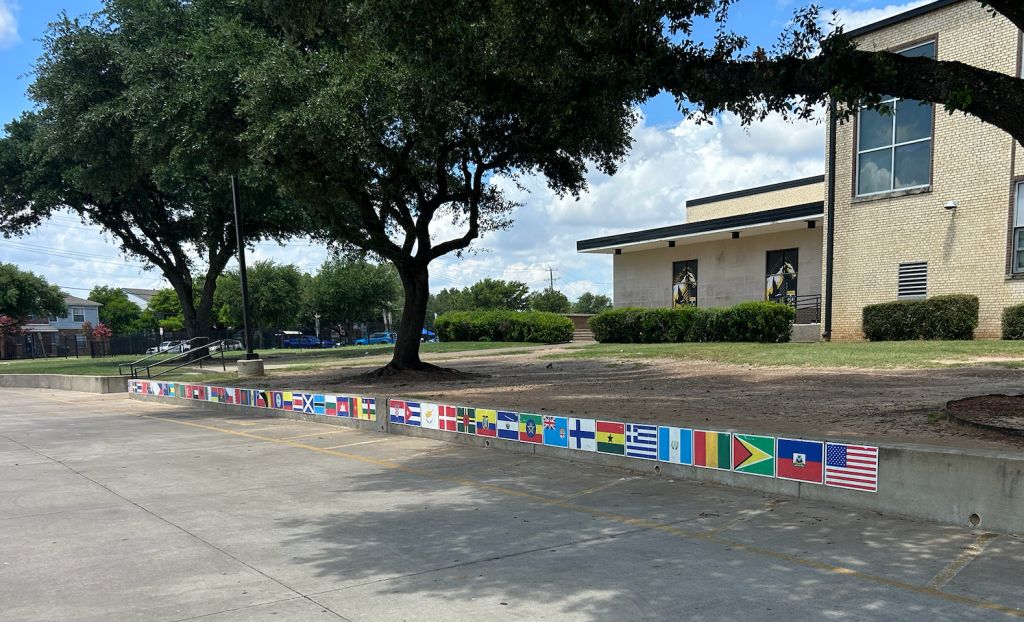
Their first step was to find a place to hold their math or STEM walks, and most didn’t have to look far. A school’s main entrance, the flag poles at the front of a school, or a garden pathway in the back, all provided perfect settings for inquiry-based learning. These are places that students walked by every day, but perhaps never stopped to consider how much math and science are present.
Once each teacher identified a location, they fed site photos and curricular goals into Chat GPT and began iterating. The process proved surprisingly human.
“Using AI has really been a gamechanger for both educators and students. AI is to be used as a tool to effectively enhance the mathematical material and student experience,” said Geovanni Delgado (4th Grade teacher at Travis TAG), who developed a walk around Travis Elementary’s main entrance. “Using AI to build high level discussion questions really helped put this together.”
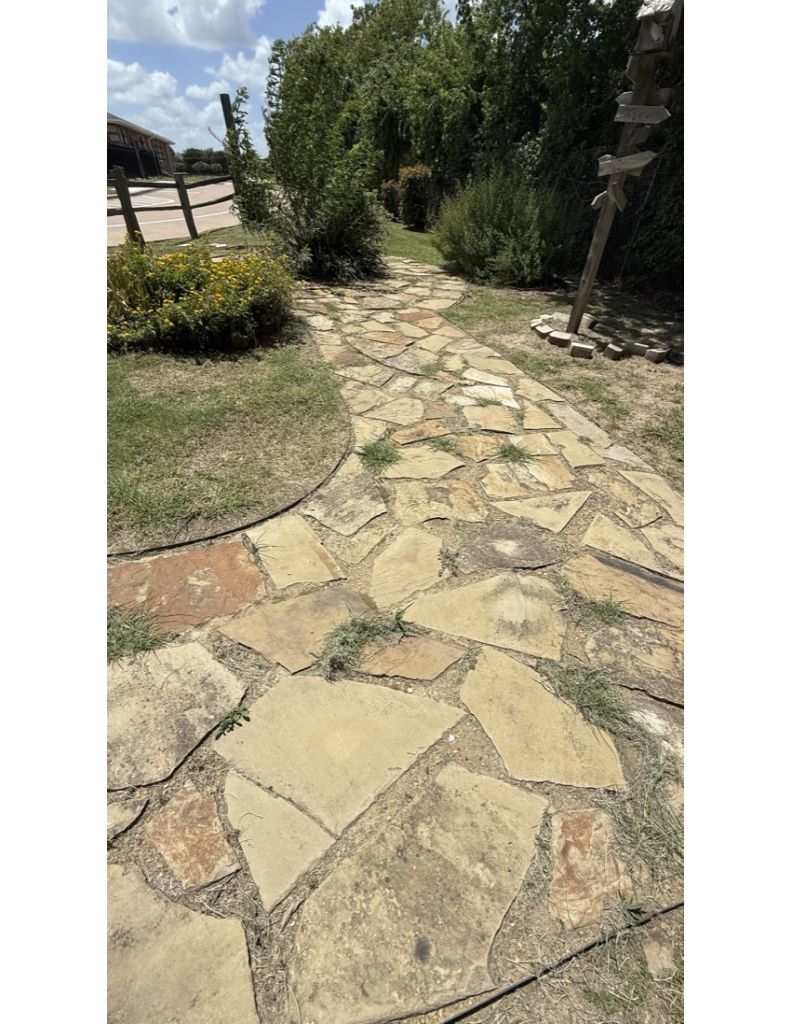
Each space became a mini-laboratory for observation, measurement, and creative questioning. As Arlene Washington (Educational Strategist at GPISD) explained, “My favorite walk stop was the very first one, which was the stepping stones leading to the garden area at the back of the school. For this stop the key question was: why is it necessary to have different shapes in this path? Students were able to identify irregular shapes and felt it was like a puzzle trying to fill in the space.”
Like any new skill, crafting and implementing AI-generated walkSTEMs required some trial and error. John Soto (7th Grade Math teacher at Travis TAG) asked his students to notice the windows on the outside of their school — specifically, the repeating pattern. “If the city wanted to paint the wall space around the windows,” John wondered, “how might students estimate the amount of area that would need to be painted — without knowing the exact methods?” When this question didn’t inspire immediate discussion, he pivoted to a different question: “What strategies could you use to figure out the total wall area and come up with a good estimate?”
This second question inspired spirited discussion. As John observed, “My first question was a little bit leading, and the second question seemed to leave it more open to the student interpretation. Students were quick to note that if they could find a reference object, they could use that to better estimate the size of the building and windows. Students drew from prior knowledge in a lot of the cases to make arguments regarding their estimations. Students tended to use more logical thinking rather than trying to tie this question to a classroom mathematical context, such as the learned curriculum.” Students naturally applied real world problem solving skills to the math question that was situated in their real world environment.
This anecdote illustrates a key principle that grounds walkSTEM methods: every child is a STEM child, with innate curiosity and problem solving skills, they just need to be empowered to believe in their own abilities and inspired to use them. Brainstorming “response strategies” allows students to think critically and creatively about how to answer questions, rather than just regurgitate a memorized formula.
“Duckies in the Courtyard”
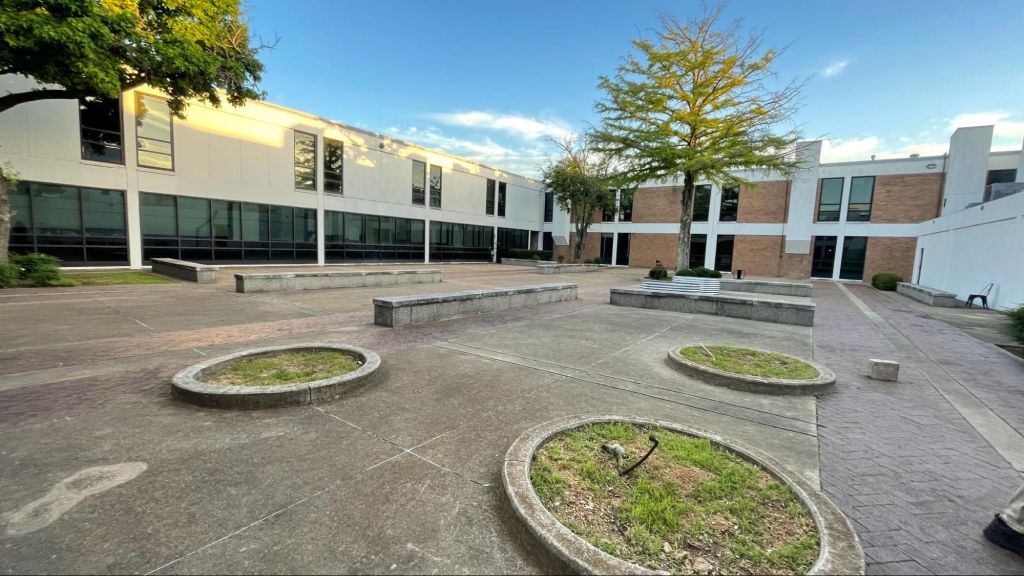
Gen AI usage by our educator cohort also provided a springboard for some incredibly creative lessons. Mary Cabanas (Algebra teacher at Garland ISD) ingeniously posed a hypothetical prank to her students involving rubber duckies, which she called the “Duckies in the Courtyard” problem.
The scenario she posed: “One afternoon, a group of students decides to pull a harmless prank by secretly placing mini rubber duckies all over the school courtyard — one duck in the first planter, three in the second, five in the third, and so on, adding two more each time. By the time they get to the 6th planter, they start wondering how many duckies they’ve used so far and how many they’ll need to keep the pattern going across the entire courtyard. How would you solve this problem?”
As Mary explained, “One of my favorite moments was seeing students who don’t usually participate jump into this problem simply because the premise was funny and easy to visualize. Even students who typically hesitate with math were laughing, counting, and sharing ideas with each other as they looked out the window.”
Each stop reminded them (and their students) that math and science live in plain sight.
Educating Educators
Among all participants, Samantha Bradbury stood out for her dual role as both teacher-coach and creative lead across multiple campuses at the Region 10 Education Service Center in Richardson, TX. Region 10 has been a valued partner of talkSTEM for many years. You can even take a virtual STEM walk at five different points of interests on their campus, thanks to these short videos, produced and developed by talkSTEM in partnership with Region 10. Her own walkSTEM stop during this summer learning experience centered on the leaf symmetry of a magnolia tree near her campus entrance. Symmetry is easy to observe, making it a great starting point for compelling questions.
When educating educators, Samantha had to help them understand best questioning practices for place-based learning, which can be challenging. As she explained, “Once I explicitly taught the How Tos, they were able to come along with better questions. I remember going through this process myself. Teachers are not used to having students answer or even create questions only based on what they see. It really makes for a great thinking exercise and has students hone in on their observation skills.”
Thanks to Samantha’s guidance, her teacher-students overcame their initial discomfort and appreciated the autonomy these methods afforded them. Normally, textbook examples are about hypothetical situations or far away places, but our generative AI tools allowed teachers to connect their lessons directly to the students’ and teachers’everyday lived experiences and environments.
“Mainly, it taught me to be specific in my prompting to build experiences for my participants. It made me be intentional in my crafting process.”

A Source of Collaboration
Across the cohort, we saw a theme of consistency and confidence. Teachers said AI shortened prep time, increased brainstorming bandwidth, and made it easier to personalize questions for their students’ realities.
“… Now I see that these AI tools are incredibly useful for engaging students and piquing their interest,” said Eric DesJardins (8th Grade Math Teacher at Dallas ISD). “I previously only used AI to generate questions, but now I learned how I can use AI tools to create activities that engage students through creative images and interactions with the contexts around them.”
The process transformed professional learning into a cycle of curiosity — teachers noticing, questioning, revising, and sharing just as their students would.
“I like using generative AI in my classroom as a starting point,” notes Sarah Rainey (High School Math Teacher at Uplift Education). “It helps me brainstorm and create better ideas for connecting the concepts that we are learning to real world scenarios. I like to think of generative AI as a collaboration source. Sometimes it has better ideas than me and sometimes I have better ideas than it, but it’s an incredible resource to make sure that my students receive really high quality content that is interesting to them.”
One of the most creative uses of Generative AI came from Edward Hambleton (4th Grade Science Teacher, Travis TAG), who created an AI image to supplement his walkSTEM stop on the school campus (pictured below). According to Edward, “We talked about why scientists call water H2O, and it led to some great discussions that cleared up misconceptions and moved our knowledge of elements further.”
Once again, our AI tool didn’t replace human thinking or creativity, but augmented it. Edward did this walkSTEM activity with all 96 of his fourth graders and added: “I would use this again for sure. It needs very little adaptation….Walking around the school and making connections was fun. Students enjoyed getting out of the classroom and making connections. The engagement was gratifying.”

Moving Forward
The talkSTEM/SMU AI Educational Innovator Project concludes its pilot program with over 30 original walkSTEM stops and hundreds of students engaged across North Texas. Yet, as several participants noted, the real outcome is renewed creativity. “This made me realize that STEM is everywhere,” one teacher summed up in the final survey. “I just needed a nudge to look.”
As Dr. Koshi Dhingra reflected, “Our goal is not to automate education but to humanize it. When teachers have the right tools, curiosity becomes contagious.”
Educators can explore our new custom AI math / STEM walk generator inspired by our collaborative work with the talkSTEM/SMU Educational Innovator cohort.
They can also utilize the open access, talkSTEM video library consisting of hundreds of STEM and math walks and join the community through the talkSTEM Educator Dashboard.
Visit talkSTEM.org to start creating your own walkSTEM, to join our community, or to sign up for the next educator cohort.
Every child is a STEM child. Every space is a STEM space.
If interested, you can access additional feedback from the 2025 talkSTEM/SMU Educational Innovators cohort.