

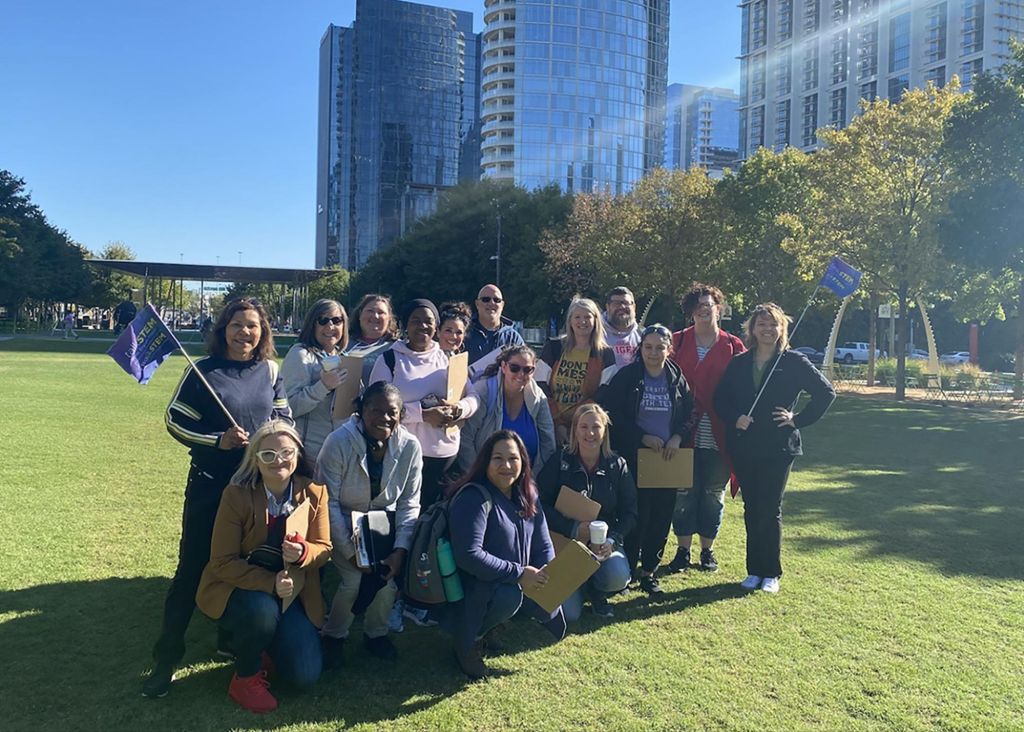
If you’re an educator, summer break is for two things: trying to recover from the previous year while already preparing for the next one. This summer, talkSTEM and Southern Methodist University (SMU) recruited twelve educators from the Dallas area and asked them to experiment with using Generative AI to develop their own math or STEM walk stops on their campus or neighborhoods. They have also been asked to use these stops with their students this fall.
We called our cohort the “talkSTEM/SMU AI Educational Innovator Summer Project,” and the participating teachers ranged from elementary to high school, and even included a couple of district-level administrators and teacher educators. They all shared a desire to increase student engagement in Math/STEM by bringing creative, inquiry-based methods into the classroom that both related to students’ lives while remaining rigorously academic. While that’s a lot of targets, we believe the STEM walk methods we’ve developed have the potential to hit them all at once!

Perhaps you’re an educator who shares our goals? If so, welcome! Check out our previous blog post “How Generative AI Can Transform Your STEM and Math Walk Development Process“, which explains some ways we have been leveraging AI to support educators who want to use customized Math/STEM walks at their school sites to engage all students. If you’re already a member of the talkSTEM community, welcome back!
With the new school year fast approaching (deep breaths, everyone, deep breaths!), we asked our cohort of educators to talk about their training and experiences, and whether they plan to incorporate this tool in their curriculum. The headline? Teachers found our generative AI tool helpful and intuitive, and are excited to use it in their classrooms and educational environments this fall!
While all our educators had classroom experience to spare, we were curious if they had prior knowledge of AI tools. It may or may not surprise you to hear that most of them already used generative AI for their job. Multiple teachers identified “refining emails to parents” as a task for which they were particularly grateful to have AI’s assistance, as well as crafting lesson plans, agendas, seating charts, and more. AI isn’t just the future of education, it’s the present – making educators more productive while saving time. As Dallas teacher John Soto noted, “I use AI almost every day. It is my second set of eyes at this point.”

While familiarity certainly made teachers more confident to try our unfamiliar tool, it wasn’t a barrier to entry. Edward Hambleton admitted they’d never used AI before, but after trying out ChatGPT with guidance and support from our team, proclaimed, “Exploring the AI-generated questions was great! It made brainstorming productive and engaging. I want to get out of the classroom more this year and have my students explore our built environment through the math/science lens.” This was precisely our intention. There should be no impediments to using our tools — be it access to economic resources or technological know-how — generative AI walkSTEMs are for everyone.

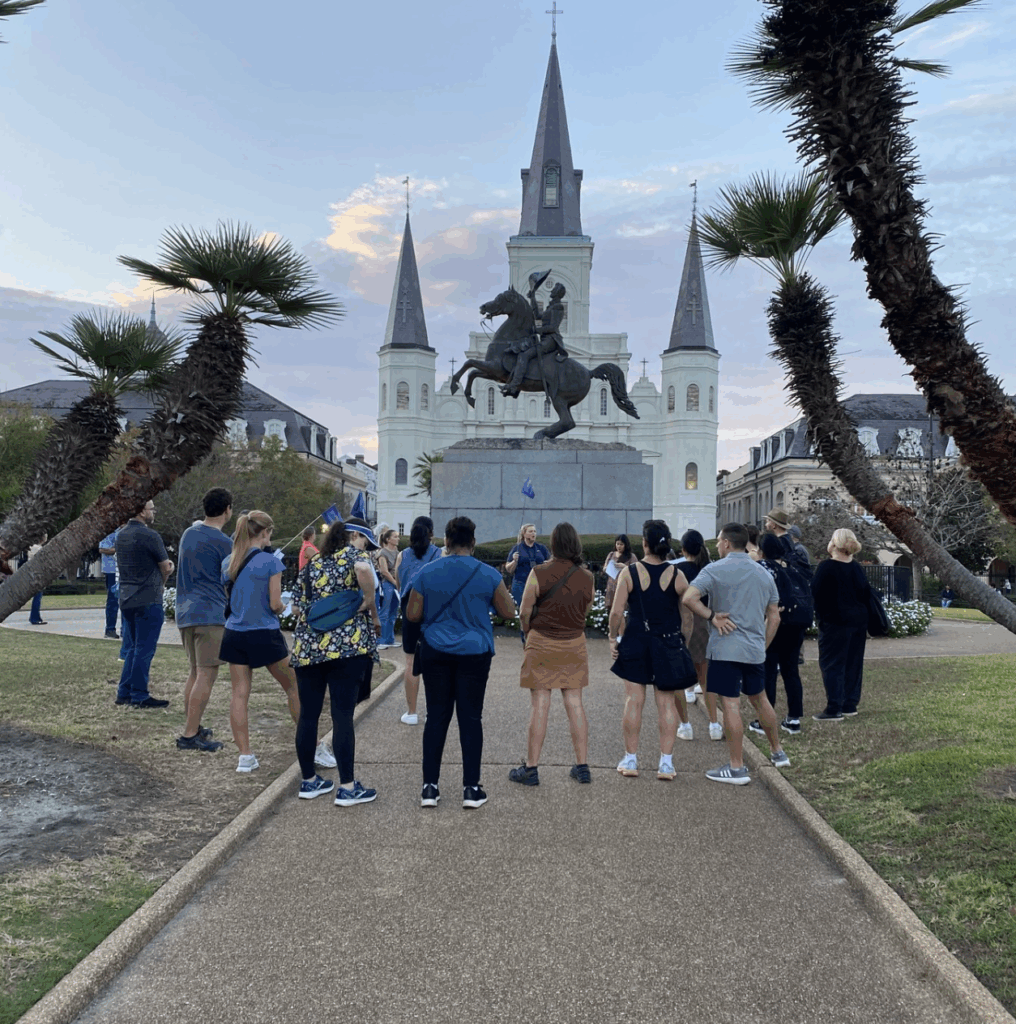
Perhaps there’s a temptation to think that while generative AI makes educators’ work more efficient, the work is less personal and deep. We found the opposite is true for our walkSTEM generator, which we discussed in our previous blog post. Each walkSTEM stop is created for a specific location selected by the educator, can include a photo and/or personal anecdote, and prompts students to ask questions that are meaningful to them. To quote Algebra teacher Mary Cabanas, “Working on [the walkSTEMs] really helped me think about how to make math more engaging and connected to everyday experiences. I’m looking forward to trying them out with students. I think they’ll help spark more curiosity and conversation in the classroom. My goal is to keep building on that engagement and make math feel more meaningful for everyone involved.”
The point above is so crucial: a walkSTEM is meant to inspire engagement, not replace regular curriculum. Like a great movie trailer or captivating opening chapter in a novel, walkSTEMs pique students’ curiosity and ignite enthusiasm. Once they’re hooked, educators can dig into the meat and potatoes of their math and science lesson. Imagine looking up from your lecture and seeing a classroom filled with engaged faces. Now imagine you’re not imagining it, but actually seeing it in your classroom this fall! Our tools and methods can help make that happen.

So are we saying it’s all roses and rainbows and there’s no adversity whatsoever? Of course not — this is still education, after all. The biggest challenge our teachers faced this summer was refining the questions to make them more specific to their subject, scope, and sequence of study while still feeling interesting and inspiring. Fortunately, our tool is designed to be iterative, allowing — or rather, encouraging — refinement. If you find that the first walkSTEM you generate isn’t exactly right, either ask the generative AI to revise its questions based on your criteria, or do that editing yourself (with the original AI-generated walkSTEM as a solid foundation). Here, practice improves everything! Geovanni Delgado noted that, “I feel confident. I believe that with the trainings, I have gained proper information/practice that helped me generate gold star (higher level) questions for the walk stops.” This sentiment was shared by other educators.

The final step? Bring the walkSTEMs into your classroom and see how students respond. We hope that using AI-generated walkSTEMs will allow students to see the math and STEM around them, and see themselves in STEM. Our ultimate goal is to help students craft their “STEM identity,” which means they can see science and math as a passion, a calling, perhaps even a career. We’ll check back in with our educators later this fall to discuss how students are engaging with our tools (ideally once the weather cools down, and we can all start conducting more walkSTEMs outside!). And, of course, teachers can also use their walkSTEMs virtually – by sharing the images and questions in the classroom.
If you’re interested in learning more, sign up for a free webinar by talkSTEM CEO and Co-founder Dr Koshi Dhingra on August 12, 2025 at 3-4 pm CT.
In the meantime, happy walkSTEMing!